ITM INDUSTRY EUROPE fair in Poznan (PL) accelerates to 2026

Publicado el 27/11/2025
ITM INDUSTRY EUROPE fair in Poznan (PL) accelerates to 2026

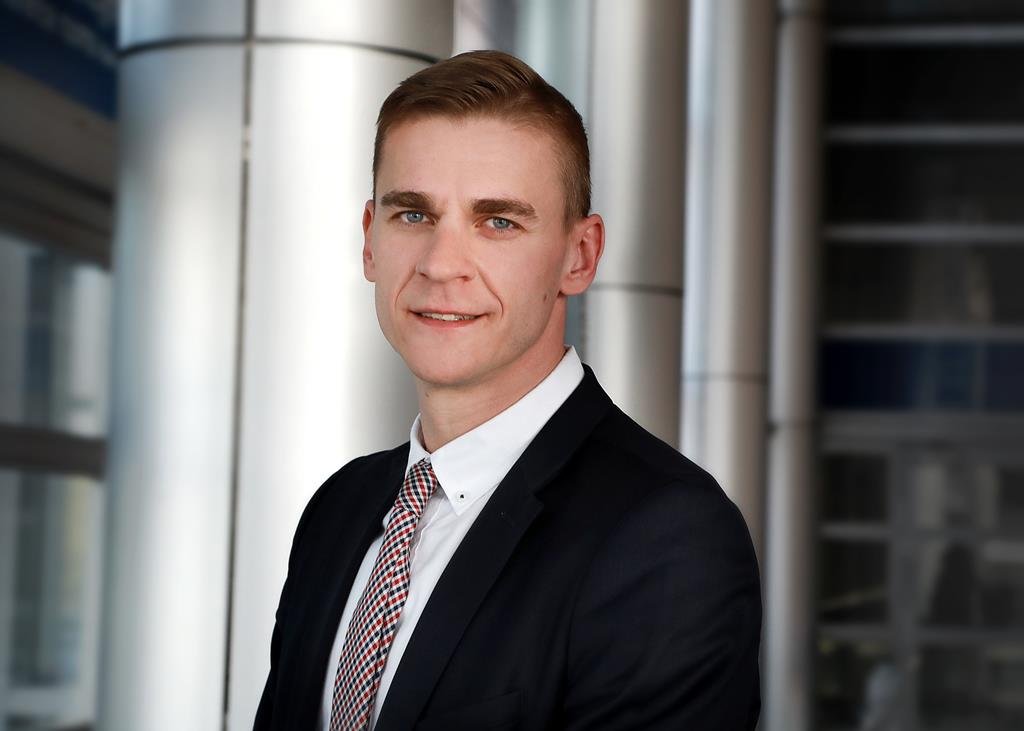
An interview with the new director of ITM INDUSTRY EUROPE, Miłosz Jankowiak, is a conversation about the strategic redefinition of the exhibition space, the use of many years of experience in project management and enthusiasm for innovations that shape the future of Polish and international industry. The upcoming edition of the fair (26-29 May 2026) is intended to be a platform connecting people, ideas and facilitating business.

You joined the ITM INDUSTRY EUROPE team as a new face, but within Grupa MTP you are a well-known figure for organizing projects of enormous scale and success, such as Polagra, Poznań Game Arena and Caravans Salon. How will this many years of experience, successfully managed, translate into industrial fairs?

Miłosz Jankowiak: It is a great honor for me to join the ITM trade fair, which has been organized by Poznań International Fair for decades. Referring to the 'gamer' jargon that is familiar to me, I can say about the previous editions of ITM: 'Good game, well played.' However, I believe that every well-played game can be even better! My many years of experience in managing the largest events at MTP Poznan Expo, such as Polagra and Poznań Game Arena, have taught me that the success of trade fairs is driven by people – open, willing to cooperate and ready to work together. I join with renewed energy and a fresh perspective to support the team. This is a time for inspiring conversations with leaders and listening to the needs of the industry. We, as Organisers, try to do what we do best: connect people, their ideas and facilitate business.

We know that after last year's edition, the team collected valuable surveys from participants. One of the challenges, despite its unquestionable advantage, turned out to be the vast area of MTP Poznań Expo. How do you plan to address this in the 2026 edition to be even closer to exhibitors?

- That's true. The extensive area allows for flexible space arrangement for several hundred exhibitors, but may be a difficulty for visitors who want to see their stands in a short time. Therefore, to be closer to the innovative heart of the industry, we plan to locate the majority of the ITM exhibition in a so-called four-pack. These are the most modern of four exhibition halls, whose spaces will perfectly complement the innovative nature of the fair. This will ensure proximity to halls 5 and 5A, and a little further on, in halls 3, the MODERNLOG logistics fair will be held. Adapting to changing market and technological conditions is key for both sectors. ITM is a place where, in a nutshell, for 4 days, you can see modern solutions live and, most importantly, make strategic purchasing decisions that optimize, among other things, production processes.

ITM INDUSTRY EUROPE is a comprehensive event. Please tell us which thematic exhibitions will constitute the main pillars of this innovative exhibition in 2026?

- ITM INDUSTRY EUROPE 2026 is a four-pronged innovation that will fully demonstrate the transformation of the industry. We have AUTOMA – the Automation, Robotics and Pneumatics Exhibition, where we will present the automation of production processes, industrial robots, cobots, modern control systems and the latest achievements in pneumatics. Then there is MACH-TOOL – Machine Tools and Tools Exhibition, the heart of machining, showcasing machining centers, milling machines, lathes, CNC grinders, as well as sheet metal processing technologies, including laser systems and press brakes, with plenty of live machine demonstrations showing precision. The third pillar is SURFEX – the Surface Treatment Technology Exhibition, focusing on painting, protective coatings, galvanisation and thermo-chemical treatment that minimizes environmental impact, of course along with live demonstrations of surface treatment and painting. Finally, we have WELDING – Welding Innovation Exhibition, where the focus will be on robotic welding stations – automatic systems for joining materials, and on safety systems that improve the safety of these processes. 

What about the accompanying program and returning exhibitors?  

We are very pleased that exhibitors place orders for their stands several months before the fair, which allows us to precisely plan the space. We will also take care of proven and frequently visited thematic zones whose partners have already confirmed their presence. Schmalz will take care of the Collaborative Robot Zone, and Troax will take care of the Industrial Safety Zone. The Demobus Zone will also return, although I won't reveal the details of the new arrangement just yet. Our regular exhibitor PNEUMAT is already planning a space for pneumatic games and competitions for maintenance managers. We are also continuing one of the pillars of the program – the Women Factories of the Future conference, organized with DBR 77 and B2B marketing expert Agnieszka Wnuk. It was at her urging that, even though the fair was still a few months away, in October this year our spaces hosted participants of the pioneering LinkedIn Local for Industry conference. The event exceeded our expectations and we plan to repeat it during the fair. This only reinforces our belief that the success of any conference or trade fair is due to people, their creativity and passion.

Although there is much talk of a slowdown in the industry, based on analyzes by the Central Statistical Office, forecasts for 2026 indicate an improvement in the situation in the industry... Are companies ready to invest? And can the ITM trade fair make it easier?

- People who follow industry trends will certainly not leave Poznań disappointed! Referring to the analyzes of the Central Statistical Office, forecasts for 2026 indicate an improvement in the situation in the industry. Companies that effectively implement innovations, optimize processes, and respond to new customer expectations will strengthen their competitive position.

Progressive digitalisation will be extremely important – the development of AI solutions, edge computing and MES/SCADA systems will support the modernization of the machinery park. In addition, the green transformation is crucial, i.e. the emphasis on energy efficiency and the Circular Economy (CE), which will force design changes in machines and devices. Finally, we expect exports to increase, as the growing competitiveness of Polish producers should result in a greater presence on foreign markets. ITM INDUSTRY EUROPE 2026 will be a living showcase of these innovations.  

Polish SMEs now have a real chance to lead the digital revolution. New programs supporting development have emerged, such as Dig.IT Digital Transformation, a project aimed at micro, small and medium-sized industrial enterprises and production services. 

The budget is as much as PLN 140 million, and companies can apply for grants from PLN 150,000 to PLN 850,000, covering up to 50% of eligible costs. This means that half of the expenses for ERP systems, production software or data analysis tools can be financed from external funds, and the ITM trade fair will be the perfect place to find and select these technologies. The call for applications ended in October, but the next one is planned for June 2026. There are also support programs under European Funds for selected voivodeships, such as for innovative business investments, especially in the field of automation and robotisation for Western Pomerania.

The introduction to these innovations will begin here in Poznań.  

We are ready to facilitate business and inspire the industry to take the next strategic step forward!
Para más información: ITM INDUSTRY EUROPE

Otros artículos que te pueden interesar

Ai in manufacturing: from pilot to practical application

Artificial intelligence as a central theme at AMB 2026 // Guido Reimann, VDMA, discusses opportunities, challenges and current developments At AMB, the international trade fair for metalworking, taking place in Stuttgart from September 15 to 19, 2026, Artificial Intelligence (AI) will be one of the three main topics, alongside automation and the circular economy. We discussed the progress made by the industry and the useful insights decision makers can draw from AMB 2026 with Guido Reimann. He is Deputy General Manager of VDMA Software and Digitalization and Coordinator of the VDMA Competence Network on Artificial Intelligence. AMB: AI was a hotly debated topic at AMB 2024. Where does the metalworking industry stand today, in 2026? Has AI become a standard practice, or are pilot projects still prevalent? Guido Reimann: For the mechanical and plant engineering sector in general, as well as for manufacturers of precision tools and machine tools, the topic of artificial intelligence has gained further importance. A VDMA survey in spring 2026 revealed that over 80% of mechanical engineering companies attach great importance to artificial intelligence technologies. Around a third of companies are already using AI solutions in production. This means the era of pilot projects is over. We are seeing increasing practical application of AI. Furthermore, many pilot projects continue to be conducted within companies to further familiarize themselves with the technology and test new application possibilities. Current business application areas related to manufacturing focus on software development, engineering and design, business management, IT, marketing, and communications. Artificial intelligence solutions are also increasingly being used in sales and product-related services for customers in the mechanical engineering industry. To fully leverage their potential, companies must focus on their digitalization and promote it strategically. AMB: The mechanical and plant engineering sector expects a tangible increase in efficiency thanks to AI. What specific figures and success stories do you know in the metalworking industry? And what are the main obstacles to implementation? Guido Reimann: AI-based solutions and approaches not only promise increased efficiency, they also ensure it along the entire value chain. This is reflected, for example, in the reduction of costs for producing technical documentation and user manuals, in the time and cost savings in purchasing by increasing the number of identical components and thus improving purchasing conditions, or in the reduction of unplanned downtime, for example on machine tools, where cost savings of 10 to 20% are possible. Furthermore, AI solutions can significantly accelerate processes in many areas: development, production, sales, and customer service. Comprehensive and sustainable digitalization is a fundamental prerequisite for the use of artificial intelligence and other digital technologies. However, obstacles often include change management, slow implementation, and a lack of human resources. Projects often fail less due to technical issues than to organizational difficulties, inadequate decision-making structures, poor engagement, insufficient knowledge of applications and limitations, and other non-technical factors. And even in the case of AI, it's true that not all pilot projects are successful. The crucial factor is knowing when to stop and redirect limited resources towards more effective digitalization activities. AMB: Which AI technologies and application areas do you believe will dominate AMB 2026, and why is participation in AMB 2026 essential for metalworking professionals interested in AI? Guido Reimann: In traditional product development and design, as well as in software development, we are now seeing numerous AI-based solutions offered by the software industry. At the same time, many mechanical engineering companies have integrated AI technologies into their related products or services, making them available for metalworking. At AMB, industry professionals will find not only manufacturers and suppliers of production machinery, but also software and service providers that support seamless implementation along the entire value chain. AMB: Industrial AI, the European AI Regulation, humanoid robotics, quantum computing: the agenda is getting busier. What developments should decision makers in the metalworking industry definitely keep an eye on over the next five years? Guido Reimann : It's true that the range of technologies, applications, and regulatory requirements relevant to the digital sector is constantly expanding. This also means that equipment manufacturers and application industries must keep pace with this change. Digital technologies are not only becoming increasingly important for internal business processes, but are also significantly influencing companies' business models. Those who are new to new digital technologies and their potential applications within their own company and in their customers' industries can lay the foundation for future success well in advance. A VDMA survey from spring 2026 also shows that mechanical engineering companies are focusing intensively on the following three technologies and intend to expand their use: artificial intelligence, digital twins, and open source software. AMB: Thank you for the interview, Mr. Reimann. Artificial Intelligence at the heart of the program For those who want to delve deeper into the topic of AI at AMB 2026, not only by visiting the exhibition stands but also by interacting directly with experts, the AMB Stage offers two special opportunities on Wednesday, September 16: From 12:00 to 1:30 p.m., VDMA Software und Digitalisierung invites you to a panel discussion entitled "Artificial Intelligence in Production - Practical Examples." This will be followed at 2:00 p.m. by the presentation "AI in Production - From Impact to Added Value," featuring industry, research, and application professionals who will discuss current developments, concrete application examples, and open questions related to the use of AI in mechanical processing. The AMB Stage is located in the atrium (EO010) at the east entrance. About AMB Since 1982, AMB has presented the highlights of the international metalworking industry. "Where metal comes alive" will also be a regular event on the industry's agenda in 2026, this year from September 15 to 19. It is the international marketplace and meeting place for metal cutting, showcasing the latest products, technologies, innovations, services, and concepts in all their facets. AMB is supported by the VDMA Precision Tools, VDMA Software and Digitalization, and the VDW Verein Deutscher Werkzeugmaschinenfabriken e.V. (German Machine Tool Builders' Association). Further information is available at www.amb-messe.de/

18/06/2026 Leer más

Machine tools: economic recovery remains fragile due to persistent structural pressures

CECIMO examined the challenges the sector will face in 2026 and discussed future risks and opportunities, in a context still characterized by political and economic uncertainty. Economic situation and prospects In 2025, the European machine tool sector continued to face a challenging economic environment, with weak demand and increased global competition putting pressure on CECIMO member companies. European machine tool production is estimated to have decreased by approximately 6.6% compared to 2024, reaching €23.5 billion, demonstrating that the slowdown has yet to ease. This trend is also impacting Europe's position in the global market. In 2025, Europe's share of global machine tool production fell to approximately 30.8%, almost 2 percentage points less than the previous year. This trend is particularly worrying when compared to 2023, when Europe accounted for 33.4% of global production. This means that Europe has lost almost 3 percentage points of global production share in just two years, indicating a gradual erosion of its "industrial position." Furthermore, the European machine tool market showed clear signs of weakening when considering consumption levels, which decreased by 3.7% compared to 2024, reflecting lower demand across European countries. Trade flows also declined: exports by European machine tool manufacturers decreased by 8.8%, while imports fell by 4.2%. The main export destinations for European machine tool manufacturers (excluding Europe) are the United States, China, and India. At the same time, when looking at European machine tool import flows, Japan, China, and South Korea continue to be the most significant suppliers. Overall, these developments confirm that the sector has been operating in a challenging economic environment, impacted by slowing investment, persistent uncertainty, geopolitical tensions, and weakening momentum in both European and global markets. Taken together, these factors have reduced demand for machine tools and negatively impacted the operating conditions of CECIMO members. A similar picture emerges when looking at the order levels of the CECIMO8* index. Domestic orders decreased by approximately 1.7% in 2025 compared to 2024, marking the third consecutive year of contraction. By contrast, foreign orders increased by 1.2% over the same period, marking the first year of growth after two consecutive years of decline. CECIMO's projections for 2026 indicate a modest improvement after two consecutive years of declining production and consumption in the European machine tool sector. Consumption and production levels are expected to increase in European countries, suggesting a possible stabilization. CECIMO's estimates for orders indicate an improvement in overall order volumes in the CECIMO8 index countries in 2026. However, this outlook remains fragile and exposed to external shocks and general market conditions and should therefore be interpreted as a transition phase rather than a full recovery. The sector will continue to operate in a highly uncertain environment, characterized by geopolitical tensions and conflicts, trade risks, potential tariff measures, energy market volatility, and weak investment dynamics in major European economies. Since European machine tool manufacturers remain highly exposed to international trade and industrial investment cycles, any deterioration in these conditions could limit the expected recovery and potential future recoveries. At the same time, CECIMO sees potential support from positive spillover effects related to public investment and strategic sectors such as defense, aerospace, electrification, artificial intelligence technologies, and advanced engineering. These sectors could help support demand for advanced and high-precision manufacturing solutions, but their impact will depend on timely implementation and avoiding further delays. A stable trade environment, increased industrial investment, and effective policy measures could mark the beginning of a gradual recovery for the European machine tool sector. Without these conditions, Europe risks further weakening its position in machine tool technologies, while global competitors continue to strengthen their industrial capabilities. "The current situation confirms that Europe cannot take its industrial leadership for granted. European machine tool manufacturers continue to operate in a challenging environment, characterized by declining demand, persistent global uncertainty, and growing competitive pressure. While some opportunities may emerge in strategic sectors, Europe needs a stable policy framework, increased industrial investment, and faster implementation of measures to support advanced manufacturing," commented François Duval, President of CECIMO.

16/06/2026 Leer más

Made in steel 2027: exhibition space sales open

Registration is now open for the twelfth edition of the international Conference & Exhibition dedicated to the steel industry. In a European market that is showing signs of stabilization after difficult years, the event confirms itself as a strategic platform for business and discussion between operators in the sector. The exhibition space sales campaign for Made in Steel 2027 , the international event dedicated to the steel industry, has officially begun. Scheduled for May 11, 12, and 13 at Fiera Milano , the event is organized by siderweb in conjunction with Fiera Milano. Interested companies can reserve their space at an event that, year after year, has established itself as an international reference point for steel producers, distributors, traders, service centers, processors, and users. An "Early Bird" option will also be available for exhibitors who book by June 19. The twelfth edition of Made in Steel presents itself with a renewed layout and expanded spaces in pavilions 8, 12 and 16 , designed to welcome an ever-increasing number of companies and promote visibility, networking and business opportunities along the entire steel supply chain. Following the growth of the 2025 edition, which attracted over 19,000 attendees and nearly 400 companies from all over the world, Made in Steel is looking to 2027 with the aim of further consolidating its role as a European platform for discussion, innovation, and development for the sector. "The opening of sales represents the first step towards an edition that aims to position the Italian steel industry in an even more international and business-oriented context," said Made in Steel CEO Paolo Morandi. "In a period of profound transformation for the European steel industry, the biennial event aims to be a place where companies, institutions, and stakeholders can meet to develop new growth opportunities and jointly address the challenges of competitiveness and industrial transition." In addition to the exhibition area, Made in Steel 2027 will also offer a rich program of conferences, round tables, and in-depth discussions dedicated to key topics in the steel industry: market dynamics, regulations, technological innovation, sustainability and the circular economy, geopolitics, and industrial competitiveness. The market context: between first signs of recovery and new competitive challenges The opening of registrations for Made in Steel 2027 comes at a particularly significant time for the European steel market. After three consecutive years of declining demand, the sector is showing signs of stabilization, despite a still highly uncertain environment. According to Eurofer's latest Economic and Steel Market Outlook, apparent steel consumption in the European Union is expected to return to growth in 2026, albeit at a moderate pace, supported by a gradual improvement in industrial activity and investment. However, demand levels remain lower than those recorded before the pandemic, and factors such as high energy costs, geopolitical tensions, and growing competitive pressure from non-European imports continue to weigh on demand. In Italy, the European Union's second-largest steel producer after Germany, companies in the supply chain are undergoing a transition phase that requires significant investments in energy efficiency, digitalization, and decarbonization. At the same time, strengthening strategic sectors such as construction, infrastructure, energy, and advanced manufacturing could help sustain demand in the coming years. Made in Steel is the international conference and exhibition dedicated to the steel industry. It is organized by siderweb - the steel community alongside Fiera Milano. Made in Steel is a conference and exhibition. It offers opportunities for business and reflection, networking and learning. It is both an exhibition showcase and a cultural hub that, with conferences, forums, and roundtables, aims to foster competitive collaboration and the exchange of information, essential elements for business growth. Since 2023, Made in Steel has been certified for sustainable event design and management according to the ISO20121 standard. siderweb - The Steel Community is the only online publication in Italy dedicated entirely to the steel industry. It is a point of reference for industry professionals, thanks to its simple style, focus on in-depth analysis, and objectivity. Since 2009, it has been tracking the prices of raw materials and steel products on the national market every week, now numbering over 60, using a method certified by the Laboratory of Statistics, Data, Methods, and Systems at the University of Brescia. Since 2022, it has published five weekly indices for scrap, carbon steel, long and flat products, and stainless steel. Since 2005, it has organized Made in Steel, the international Conference & Exhibition dedicated to the steel industry, and structured its contents: conferences, interviews, and outlooks.

15/06/2026 Leer más
Suscríbete a nuestro boletín
Para mantenerse actualizado sobre las últimas noticias del mundo industrial
Contáctanos
Boletín de imágenes LIndustriale
Dati Legali

L'industriale s.r.l.
P. IVA: 12212870153
Codice Fiscale: 12212870153

Sede Legale

Via Carlo Dolci, 32
20148 Milano (MI)
Italy

Registro Imprese

Iscrizione R.I.: 12212870153
REA: MI-1539011
Capitale sociale: Euro 10.400,00 i.v.

Top
This website is protected by reCAPTCHA, therefore the Google privacy policy and terms of service apply.