The smarter grinding wheel gives way

Publicado el 22/12/2025
The smarter grinding wheel gives way

How elastic bonded diamond tools optimize precision machining

When the hardest material in the world and soft plastic come together, the result is tools with very special grinding properties. We are talking about elastic bonded diamond grinding wheels. These show their strengths during finishing and ensure the perfect finish. Innovative processes such as these are necessary because the manufacturing industry faces the challenge of producing increasingly complex and precise components from resistant materials. Conventional production methods often reach their limits here, especially when the surfaces are so fine that they require particularly sensitive processing. At the GrindingHub trade fair, organized by the VDW (German Machine Tool Builders' Association) in Stuttgart from May 5 to 8, 2026, visitors will learn more about innovative grinding techniques for achieving the highest surface qualities.


For demanding finishing and polishing processes
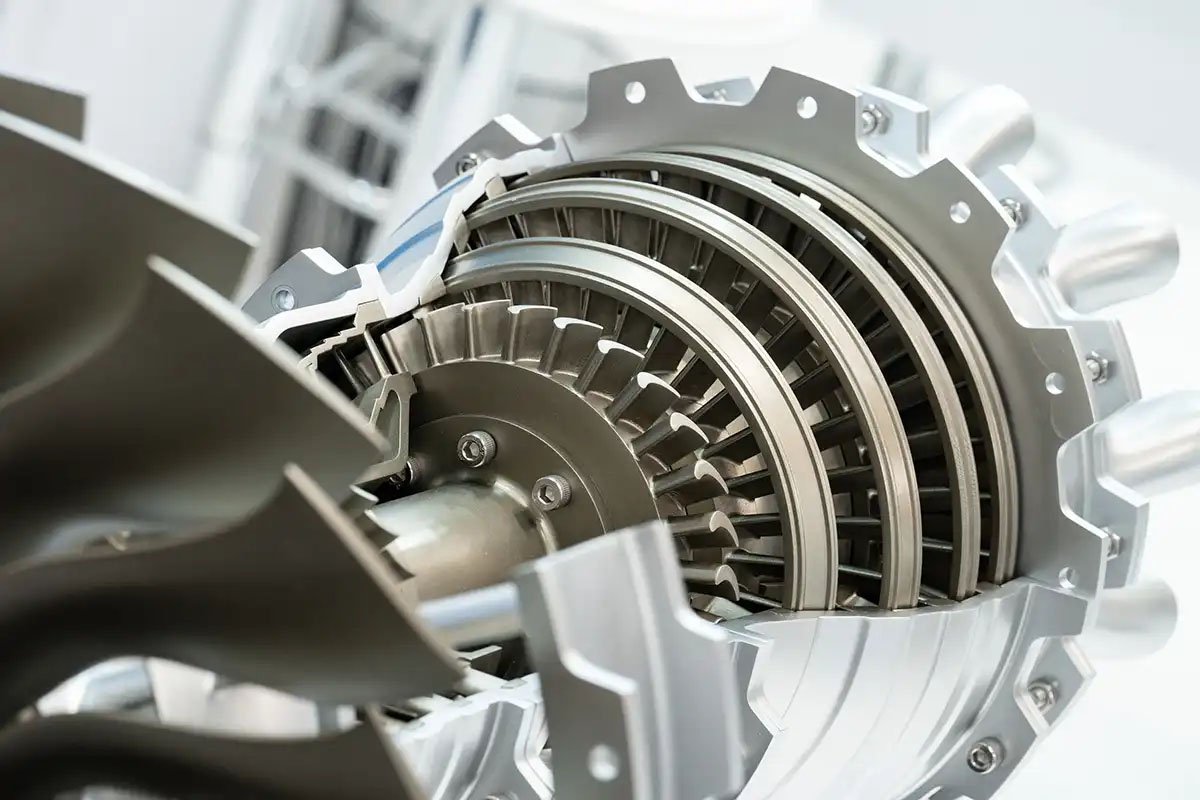
Elastic grinding and polishing tools are used in a wide variety of industries. In metalworking, they refine surfaces ranging from the finest surgical instruments to heavy-duty turbine blades. These tools can be used to accelerate manufacturing processes and increase cost-effectiveness and sustainability in production. "Our elastic bonded diamond tools demonstrate their strengths wherever extremely hard materials such as carbide need to be machined with precision," says Jens Meiberg, Head of Technology Development at GrindingHub exhibitor Artifex Dr. Lohmann GmbH & Co. KG, a specialist in elastic grinding and polishing tools based in Kaltenkirchen near Hamburg. "They achieve their maximum effect particularly in applications where extremely fine surfaces, even mirror finishes, are required," says Meiberg. This makes them ideal for demanding finishing and polishing processes. According to Meiberg, Artifex is currently focusing on the machining of carbide drilling and milling tools to improve cutting edges and achieve more efficient chip removal from cutting tools.


Greater efficiency and reduced overall costs

Technically optimal surfaces are one thing, cost-effectiveness is another. In industrial practice, it ultimately comes down to the cost-benefit analysis for the user. In other words: When does the improved surface quality justify the higher cost? "Studies show service life improvements of more than 50 per cent compared to unprepared tools," says Artifex manager Meiberg. Combined with faster chip flow and greater chip volume, users achieve significant cost and service life advantages. Machining with elastic bonded diamond tools significantly improves the surface quality of the machined workpieces. In practice, this optimization leads to noticeably longer service life for subsequent tools and more stable and reliable process behavior. Users benefit from greater efficiency and reduced overall costs," says Meiberg.


Delicate machining for delicate surfaces
Some surfaces are so delicate that they must be machined with extreme care. As the Head of Technology Development at Artifex explains, flexibly mounted diamond particles achieve "non-contour-changing glossy surfaces" by cutting topological material peaks. The homogeneously distributed abrasive medium bounces back and forth in the bonding matrix. Put simply and in layman's terms: the soft mass gives way slightly, so that the grains wobble slightly when rubbed instead of scratching firmly. Therefore, the surface is only gently smoothed and polished, rather than aggressively removing material or changing the shape. In other words: the smarter grinding wheel gives way. "The pressure and speed parameters of the process pose the greatest challenge in preventing grain break-outs from this newly developed soft bond," says Meiberg. The surface quality can be achieved reproducibly throughout the entire life cycle of the disks. Thanks to the tool change options in the machine, machining is carried out in a single clamping and not through downstream processes. According to Meiberg, Artifex's in-house Research and Development Department ensures the continuous advancement of diamond tools – particularly with regard to new carbide alloys and modern carbide tools.

Scope for basic research down to the nanometer range
There is still plenty of scope for basic research at universities in the micro- and nanometer range. This also applies when using flexible precision machining tools in the finishing of structured surfaces. Dr. Monika Kipp, who heads the Grinding Technology Department at the Institute of Machining Technology at the Technical University Dortmund, is intensively involved in this topic. "One example of the use of flexible precision machining tools is the finishing of structured surfaces," says Kipp. If these are produced by milling, for example, micro-burrs may occur. In order to remove these without significantly altering the structure and at the same time improving the surface finish, the tools must be highly adaptable and only a very small amount of material should be removed. "To achieve this goal, our research focuses on the fundamental process behavior of flexible diamond tools," says the scientist, who was recently awarded the Otto Kienzle Commemorative Medal by the WGP (Scientific Society for Production Engineering).


Perfect choreography
When machining highly sensitive surfaces with flexible tools, it is essential to know exactly how the tools and material interact. "In order to avoid unwanted contour changes in precision machining with elastic bonded diamond grinding wheels or other flexible grinding tools, it is essential to understand the basic process interactions," says Kipp, summarizing the key challenge. This includes, for example, coordinating the process parameters and the bonding strength or flexibility of the tools and thus the local contact situation. In addition, according to the scientist, targeted adjustments to the process control with regard to the kinematics of the procedure could also be effective. In layman's terms, you can imagine it as choreography. How fast does the grinding tool move? How fast is the workpiece moving? At what angle or pattern do the grains strike the surface? How often does a single grain engage with the material? For optimal results, perfect coordination is essential.


Three factors: contact pressure, contact time, grain size
The surface quality in precision machining depends, among other things, on the local contact situation, says Kipp. "When it comes to process design, a distinction must be made in terms of the objective: whether the aim is to achieve the lowest possible roughness or whether functional surfaces with structural or contour elements need to be reworked," explains the researcher. Flexible abrasive tools can be used for corresponding applications. Material removal and thus the surface finish can be controlled by adjusting the contact pressure, contact time, and grain size, among other factors.

The grinding gap is a mystery

Applications at the limits of what is technically possible and economically viable therefore open up a wide field for industrial and academic research. Because the saying among experts still holds true: "The grinding gap is a mystery." This phrase suggests that practitioners and researchers still need to shed light on the deepest physical and process engineering secrets of grinding in order to technically optimize industrial production processes and make them more efficient and sustainable.
Para más información: Grinding Hub

Otros artículos que te pueden interesar

Metal show & tib 2026 will take place on 12–15 may at romexpo

As advanced technologies and digitalization continue to shape the investment strategies of industrial companies, METAL SHOW & TIB remains a key event for technical professionals.The 2026 edition, scheduled for 12–15 May in Bucharest, will bring together manufacturers and suppliers of equipment, technologies, and solutions for sheet-metal and tube processing, machining, CNC systems, additive manufacturing, welding, cutting, measurement and control instrumentation, industrial software, metallurgy, hydraulics, pneumatics, robotics, and automation.By expanding the focus on advanced technologies for smart factories, robotics, and systems integration, and by opening the event to broader international participation with a strong framework for high-level technical dialogue, METAL SHOW & TIB 2026 positions itself as a primary reference point for the technical industry.To support the exhibitor community, the organizers will maintain the same participation fees in 2026, unchanged for the past four years.Live demonstrations on exhibited equipment, direct technical discussions with industry leaders, buyers, suppliers, and service providers, along with commercial offers available exclusively during the event, remain essential components that strengthen industrial networking at METAL SHOW & TIB and drive new business opportunities while reinforcing existing client relationships. More information is available at www.metalshow-tib.ro

16/01/2026 Leer más

Fastener fair italy 2026: the leading event for the fastener and fixing industry returns to milan

Following the success of its fourth edition, which brought together over 200 exhibitors from 19 countries and attracted more than 2,400 qualified visitors from across Europe, Fastener Fair Italy will return from 24 to 25 June 2026 at CityLife – Allianz MiCo in Milan. The event is confirmed as Italy’s key meeting point for professionals in fasteners, fixings, and fastening systems. Visitor registration will open in early February, giving industry professionals the opportunity to plan their attendance well in advance.To date, many companies have already confirmed their participation in the only Italian trade event dedicated entirely to the sector, including major players such as Ambrovit, Berardi Bullonerie, Bontempi, Corbetta Ermanno, Fastbolt, Gandini, Index/Chavesbao, Vilux Viterie, Vipa, Viteria Fusani, Viteria Smel and many more. Additional exhibition opportunities are still available for manufacturers, wholesalers and distributors of fastening systems, machinery producers, and suppliers of related technologies and services wishing to engage with a highly specialised audience.The fifth edition of Fastener Fair Italy introduces a refreshed format enriched by several new features designed to offer visitors an even more comprehensive, forward-looking experience. Among the highlights are two new thematic areas that further expand and enhance the exhibition profile.
One will focus on hand tools, showcasing a wide range of equipment used in assembly, installation and maintenance complementary products that support and enhance fastening applications, giving professionals an immediate overview of the most relevant solutions for their work. The second will be dedicated to precision turning, bringing together manufacturers specialising in advanced machining and subcontracting, and offering visitors the opportunity to meet qualified companies and explore high-quality turned components produced by industry experts.These dedicated zones are designed to make the visit more streamlined and targeted, facilitating the search for specific products, connecting with the most suitable suppliers, and staying up to date on key technologies and market trends. Complementing this offer, a series of financial support measures will be available to exhibiting companies, making participation easier and encouraging a broader and more diverse presence.“Returning to Milan with Fastener Fair Italy 2026 is an important milestone for us - says Stephanie Cerri, Event Director for the European Fastener Fair exhibitions. - At a time when the fastener and fixing industry is facing a challenging market environment, it is more important than ever to create opportunities for dialogue and collaboration across the supply chain. We look with confidence towards a promising 2026 for our sector: the exhibition will provide visitors with the opportunity to meet leading industry players, explore cutting-edge solutions and gain first-hand insight into the technologies shaping new production standards”.Supported by key Media Partners, including Expometals, Fasten.it, Fastener Fixing Magazine, Fastener World, Galvanotecnica and Italy Export, the event also aims to further expand its international reach, attract new exhibitors from strategic markets, and enhance the quality of professional visitors, with a particular focus on distributors, buyers and technical decision-makers. Networking initiatives, educational content, and technical insights will also be included to enrich the visitor’s experience and foster new business opportunities.

15/01/2026 Leer más

Combined grinding processes for greater process efficiency. experience the latest technologies at gr

Frankfurt am Main, January, 2026 – GrindingHub 2026 will present the current state-of-the-art of grinding technology with a focus on topics such as hybrid machining systems and cross-process efficiency increases. How can sophisticated individual processes such as grinding or eroding be combined for even greater output and precision? When does the use of laser technology make sense? From May 05 to 08 in Stuttgart, the trade fair will showcase how users can achieve higher material removal rates, less downtime and maximum process stability with state-of-the-art processes. GrindingHub will set the technological benchmark for networked, resource-efficient and high-precision manufacturing of the next generation.More efficiency through numerous combinations"Today's tool manufacturers are striving for ever more efficient ways to produce their tools to customer specifications – and to do so on an automated basis", says Tobias Trautmann, Managing Director of Vollmer Werke Maschinenfabrik GmbH based in Biberach an der Riss, Germany. "We support this goal with various sharpening technologies that can not only machine ultra-hard cutting materials precisely, but also optimize manufacturing processes thanks to digital solutions and AI applications." At GrindingHub 2026, the Vollmer Group will be showcasing its portfolio of grinding, eroding and laser machines that allow customers to machine ultra-hard cutting materials such as carbide, PCD (polycrystalline diamond), CVD (chemical vapor deposition) diamond or PcBN (polycrystalline cubic boron nitride). When it comes to efficiency, hybrid machines are of particular interest for sharpening tools faster and with higher quality. One example of these are full-head PCD tools with complex geometries: The contours in the carbide can be ground and the cutting edges in the PCD head can also be eroded in a single clamping operation. This procedure not only shortens both productive and non-productive time, but also makes the transition between the PCD head and the carbide blank virtually seamless – without any unevenness or graduation.Grinding machines are used by tool manufacturers to sharpen all cutting edges made of carbide or PcBN with diamond wheels. However, if tools cannot be ground or can only be ground to a limited extent, eroding or laser machines are used. Lasers have the advantage that – in contrast to erosion – they can also be used on non-conductive materials. The wear that happens on grinding wheels does not take place on these systems because the cutting edges are machined without contact during eroding and lasering. The tool machining also takes place without significant thermal influence.Regardless of the sharpening technology in question, Vollmer's philosophy is that its machines are always suitable for automated tool machining in 24/7 shifts. Central robot systems control loading trolleys, pallet loaders or chain magazines and monitor the fully automatic complete machining process. Digital solutions in particular are currently being used to increase efficiency in automation, which is why Vollmer equips its machines with IoT gateways as standard in order to network them with their digital environments. Data from different machines is recorded, processed and managed via a central IT platform. Supported by AI-based algorithms, a chatbot provides information on documentation or historical data to answer queries about machine utilization, the number of tools produced or missing parts. "To make our machines even more efficient, we collaborate intensively with customers, industry partners and research institutes," emphasizes Ralf Grosshauser, Managing Director of the Vollmer Group. "We collaborate with Furtwangen University on grinding technologies and belong to a network of around 30 companies that exchange knowledge and help each other stimulate future innovations."Productivity increases of up to 70 percentStuder's WireDress technology is an example of intelligently combined hybrid technologies in the field of grinding technology. It is integrated into high-precision CNC grinding machines for external cylindrical grinding and now also for internal cylindrical grinding. The full integration of electro-erosive dressing technology eliminates the need to manually dismantle and reset the grinding wheel for the dressing process. Christoph Plüss, CTO of United Machining Solutions Management AG, based in Bern, Switzerland, describes the electrical erosion process as follows, "In the WireDress process, metal-bonded diamond or CBN grinding wheels are dressed, profiled and sharpened in the machine using a wire. The dressing process can be carried out at the full working speed of the grinding wheel. This massively reduces non-productive time. Especially when grinding high-alloy, hardened steels, carbides and ceramics, where metal-bonded grinding wheels are used, WireDress offers enormous advantages and provides productivity increases of up to 70 percent for certain materials when this technology is used." The newly founded United Machining Solutions Group has now expanded its portfolio to include 15 brands in 2025 (including Studer). The group is one of the largest machine tool manufacturers in the world with a total turnover of over 1.5 billion US dollars and, as usual, will be represented at GrindingHub and ready to engage in face-to-face discussions with its team of specialists. ">After hardening, internal gears can be machined using various processes – depending on the required quality level – such as honing, profile grinding, generating grinding, hard skiving or hard broaching. Each process has specific strengths and limitations: Hard skiving is highly cost-effective, but reaches its limits when very high precision is required. Profile grinding offers maximum precision, but is slow and cost-intensive – and therefore only has limited appeal for high-volume production, for example in the e-mobility or commercial vehicle sectors.Liebherr-Verzahntechnik GmbH from Kempten has closed precisely this gap with SkiveFinishing. The process combines the kinematics of power skiving with a dressing-free, electroplated tool and thus enables a significantly higher quality than hard skiving – with shorter process times and lower costs than profile grinding. This combines the best of both worlds: Excellent precision and economically robust process control. "SkiveFinishing combines the flexibility of skiving with the advantages of CBN hard finishing," explains Haider Arroum, Division and Site Manager Tools. "Optimal roughness values and economical processes can be achieved through the targeted selection of CBN grain sizes."Significant efficiency gains are now also achieved with twist-free generating grinding. With the further development of this process, Liebherr-Verzahntechnik is raising both the economic efficiency and the quality of hard finishing to a new level. The machining times when using dressable grinding worms have been reduced almost to the level of conventional processes – even with asymmetrical gears. At the same time, optimized shift methods allow the integration of fine grinding or polishing in a single operation. The technology is suitable for a wide range of applications: From transmission components for e-mobility to special and heavy-duty transmissions. "In combination with the high rigidity of our machines – which our customers repeatedly praise – we offer measurable added value in terms of efficiency and precision and therefore a clear competitive advantage," emphasizes Fabian Stadelmann, Technology Development Manager. ">Hybrid technologies are among the major levers that can allow a company to position itself at the forefront of the technology and also boost profitability. The innovations described here impressively demonstrate where the future of grinding technology lies. Combined with other megatrends such as automation and artificial intelligence, this opens up countless opportunities to stay ahead of the global competition. As a roadmap towards future innovations, the third edition of GrindingHub will offer unique opportunities in this regard.

14/01/2026 Leer más

Suscríbete a nuestro boletín
Para mantenerse actualizado sobre las últimas noticias del mundo industrial

Contáctanos
Boletín de imágenes LIndustriale

L'industriale srl 2026 - P. IVA 12212870153 - Reservados todos los derechos
Política de privacidad - Cookies

Top
This website is protected by reCAPTCHA, therefore the Google privacy policy and terms of service apply.