
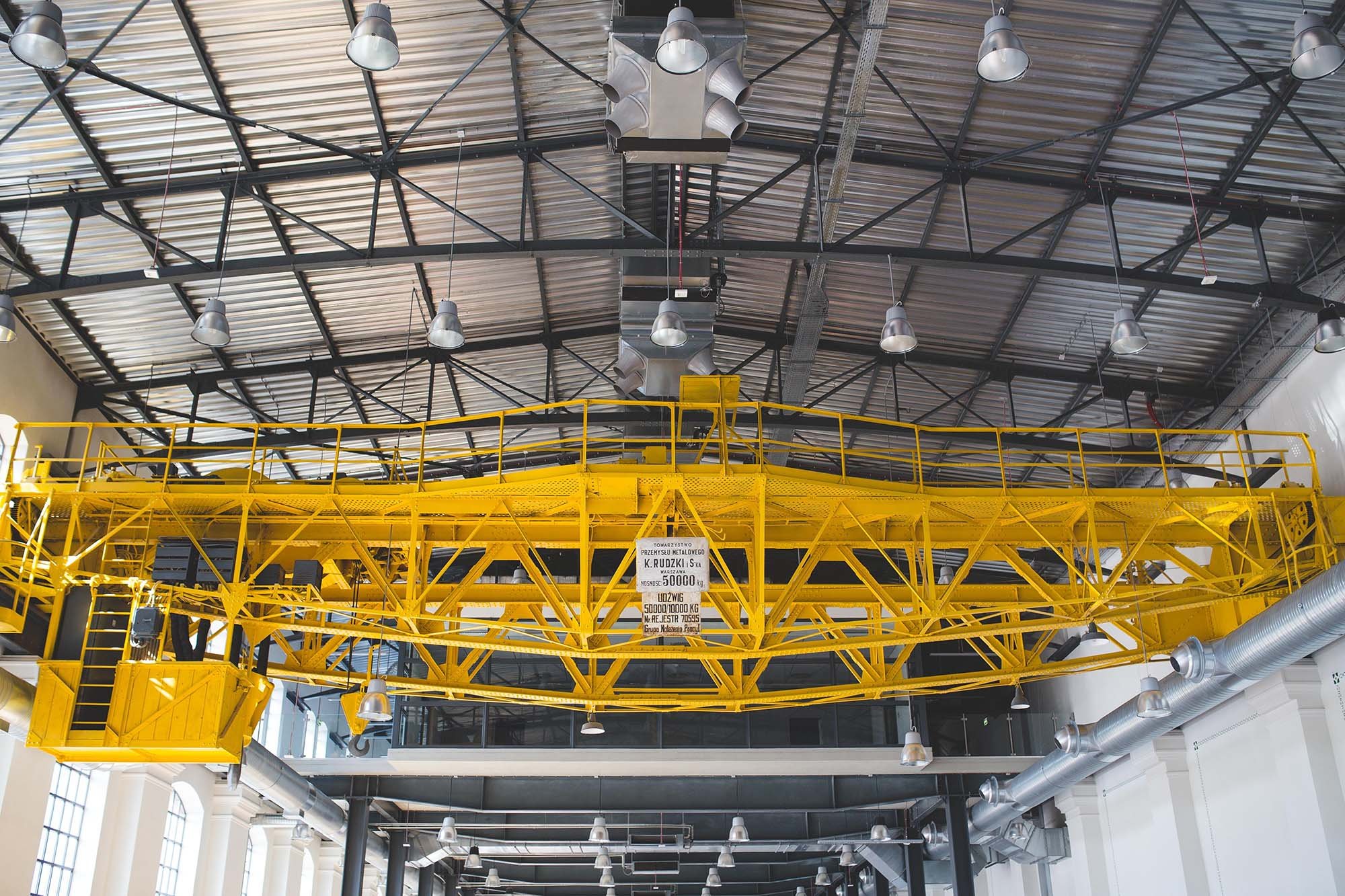
Aisem: "There's a risk of production shutdowns for some companies. It's necessary to ensure more adequate time and effective training support tools."
Starting May 19, overhead crane operators in Italy, a professional category employing over half a million people, will also be required to be trained in accordance with the 2025 State-Regions Agreement (ASR 2025). Without this training, required by specific regulations, it will be impossible to practice the profession. Incidentally, the Ministry of Labor lists the May 19 date on its website, although based on the publication date of the ASR 2025 in the Official Journal, compliance effectively begins on May 25. This discrepancy in dates is creating uncertainty among operators regarding safety, an issue on which uncertain interpretations should not exist.
Before the introduction of the new Agreement, training on the use of equipment such as overhead cranes was already required by the Consolidated Law on Occupational Safety (Legislative Decree no. 81/2008), but the choice of training program remained at the discretion of the employer . With the new Agreement, however, overhead cranes have been included in the list of work equipment for which specific, standardized, and predefined training is mandatory—both in content and in terms of hours—as is already the case, for example, for forklifts.
However, significant critical issues have emerged in the practical implementation of ASR 2025. The timeframe allowed for compliance has proven too short given the vast number of companies involved. According to estimates by AISEM , the Italian Association of Lifting, Elevation, and Handling Systems affiliated with Anima Confindustria, over 150,000 overhead cranes are currently in operation in Italy, each operated and managed by different operators within the company.
This creates a difficult-to-manage paradox: by law, all overhead cranes used by operators without adequate training, i.e., in line with the provisions of the ASR 2025, must be stopped, with serious operational repercussions for many companies.
AISEM President Massimiliano Bariola comments: "The introduction of mandatory licensing for overhead crane operators raises regulatory and institutional controversies. The distinction between the previously required training and the current mandatory requirement, with standards set by interinstitutional agreements, creates uncertainty and difficulties of interpretation for businesses. It should also be considered that some companies may not yet be aware of this new requirement, given the short timeframe between the announcement of the requirement and the entry into force of the regulation. Given the large number of operators involved ," Bariola continues, " AISEM had asked the institutions for at least five years to complete the training courses, but this request was not granted. It is therefore necessary for the competent authorities to collaborate to ensure more adequate time and effective training support tools, in order to reconcile safety and production continuity."
Matteo Frigo , lifting group leader within Aisem, emphasizes: "The operational difficulties in implementing mandatory training are evident and shared by the operators themselves. There is also a real risk of short-lived or poorly structured training courses being organized, which do not follow the correct required training path . We remind you that Aisem and its member companies are accredited training organizations , in full compliance with the provisions of the State-Regions agreement. At this time, open dialogue between regulatory bodies, companies, and trade associations is needed to prevent a measure designed to protect safety from becoming an obstacle to regular work activities. Aisem will continue to carefully monitor the evolution of the situation, confirming its commitment to complying with safety regulations and industrial development needs."
AISEM is the Anima federated association that brings together the best national businesses for the construction and distribution of material handling, lifting, and hoisting machinery. It represents over 80% of the entire national production, approximately 40% of which is exported.
ANIMA Confindustria is the trade organization within Confindustria that represents companies in the mechanical and related sectors, a sector that employs 224,000 people, generates a turnover of €59.1 billion, and will account for approximately 60% of exports in 2025 (Anima Research Office 2025 forecasts). The macro-sectors represented by ANIMA are: construction and infrastructure; material handling and logistics; food production; energy production; industrial production; and safety and environment.
Italian valves and taps: exports to japan worth nearly 9 million euros, with a positive trade balanc
AVR participated in the Japan Valve Manufacturers' Association Assembly last October with a delegation of six member companies. Company visits, institutional meetings, and technical discussions were held to strengthen collaboration between the two countries' industries.Almost 9 million euros in Italian exports, a value approximately three times that of imports and a positive trade balance of almost 6 million. These are the key figures for 2025 relating to trade in valves and faucets between Italy and Japan, which totaled approximately 12 million euros. Strengthening commercial, industrial, and technical relations between the two sectors was discussed by AVR – Italian Valve and Tap Manufacturers' Association, a member of ANIMA Confindustria, and the Japan Valve Manufacturers' Association – JVMA, at their Assembly held in October. AVR participated in the event with a delegation of six member companies, led by President Sandro Bonomi. The program included visits to Japanese companies, institutional meetings, and opportunities for technical discussion aimed at deepening knowledge of their respective production systems, sharing experiences, and identifying new areas of industrial and commercial cooperation.A collaboration built on reciprocityThe mission represented a new stage in a relationship built in recent years through opportunities for meeting and exchange between the two associations. JVMA representatives have participated in the AVR General Assembly for two consecutive years, and in October 2025, a Japanese delegation undertook a study tour in Italy.AVR's visit to Japan is the natural continuation of this path and aims to transform the periodic meetings into an ongoing and structured dialogue. The objectives include sharing technical knowledge and market information, comparing standards and regulations, strengthening relationships between member companies, and developing potential joint initiatives.Control valves and ball valves on the riseIn 2025, the two main categories of Italian exports to Japan - control valves and ball and plug valves - will have reached a total of 5.2 million euros, representing 58.4% of the sector's total exports. Control valves stand at 3.1 million euros, up 19.6% compared to 2024, while ball and plug valves reach approximately 2.2 million, with an increase of 34.7%.The ones that are growing the most in percentage terms, despite lower export values, are steel gate valves, which reach approximately 395 thousand euros (+239%), temperature control valves, equal to approximately 132 thousand euros (+106.1%), and safety valves, which exceed 400 thousand euros (+77.6%).On the import front, purchases Italian exports from Japan amount to just over 3 million euros, up 7.6% compared to 2024."Italy and Japan share an industrial culture based on quality, precision, and the ability to innovate - declared Sandro Bonomi, President of AVR -. In 2025, sectoral trade between the two countries reached approximately 12 million euros, and Italy recorded a positive trade balance of almost 6 million. Even in a complex international scenario, these data confirm the competitiveness of our manufacturing and the ability of Italian companies to respond to the needs of an advanced and selective market like the Japanese one.""This mission is the natural continuation of a relationship based on exchange and reciprocity - continued Bonomi -. We want to go beyond the dimension of occasional visits and build a stable framework for dialogue and information exchange with JVMA. The company visits and scheduled meetings will allow us to gain a closer understanding of Japanese manufacturing, share expertise, and create new opportunities for collaboration between companies in the two countries."The comparison in the International Valves and Taps AllianceThe collaboration between AVR and JVMA is strengthened by their shared membership in the International Valves and Taps Alliance, created under the leadership of AVR to bring together the main associations of valve and tap manufacturers from Europe, the United States, and Japan. The Alliance constitutes an international technical forum to jointly address the sector's key technological, regulatory, and commercial challenges.AVR's European role represents a further area of interest for JVMA. Sandro Bonomi is also President of CEIR – Taps and Valves Europe, the European Federation of Tap and Valve Manufacturers. The discussions initiated in Japan will therefore contribute to developing closer relations between JVMA and the European industrial network, fostering greater mutual understanding and ongoing dialogue on the sector's transformations. The mission takes place in the year of the 160th anniversary of diplomatic relations between Italy and Japan, at a time of strengthening economic and industrial cooperation between the two countries.AVR is the ANIMA Confindustria federated industrial association that represents Italian companies in the valves and taps sector. In 2025, the sector reached a turnover of 9.55 billion euros, with an export/turnover share exceeding 60% (Anima Research Office data).ANIMA Confindustria Meccanica Varia is the industrial trade organization that, within Confindustria, represents companies in the mechanical and related sectors, a sector that employs 224,000 people for a turnover of 59.1 billion euros and an export/turnover share of 60% (Anima Research Office data). The macro-sectors represented by ANIMA are: construction and infrastructure; handling and logistics; food production; energy production; industrial production; safety and environment.

 Industriale.it certification