

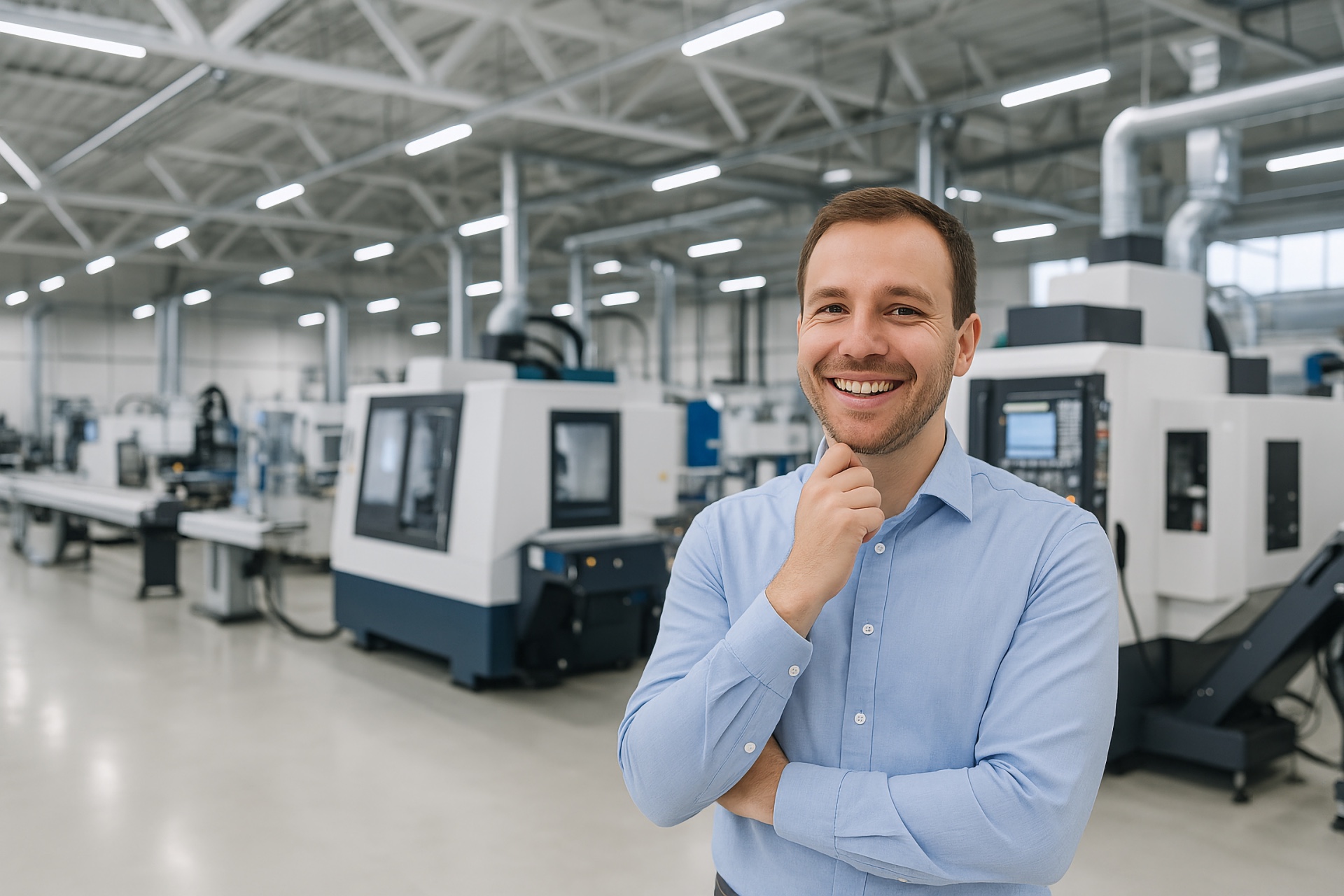
When we talk about mechanical carpentry, we are referring to a wide range of metalworking processes, from the most common to the most complex. Some operations, such as drilling, are easily understood, while others, such as reaming and boring, are less well-known to non-experts. Let's see an overview of the main techniques adopted by companies in the sector, such as Stox Srl of Noventa di Piave, specialized in mechanical carpentry and precision assembly.
Drilling
Drilling consists of creating a hole in the metal. It may seem like a simple operation, but in reality it has numerous variations:
• through cylindrical hole, which passes completely through the piece,
• countersunk hole, with conical mouth,
• multi-profile hole, with different diameters along the depth.
The techniques also vary: from plunge drilling, which proceeds vertically, to core drilling, which removes only the outer ring, to non-rotating drilling, in which it is the piece that moves and not the tool.
Milling
Milling involves the removal of material to obtain precise surfaces. It is divided into two phases:
• roughing, for rapid removal of the material,
• finishing, for finishing the piece.
Among the main types:
• spinning (flat and smooth surface),
• profiling (2D and 3D concave/alternate shapes),
• milling of slots or grooves,
• chamfer milling (inclined corners),
• shoulder milling, with the simultaneous creation of two faces.
Turning
Turning is used to create cylindrical shapes. The tool remains stationary while the workpiece rotates. Here too we distinguish two phases, roughing and finishing, and various techniques:
• internal turning, on the internal diameter,
• external turning, on the outside of the piece, with variations such as:
o longitudinal, along the axis,
or facing, on the face,
or profiling, for complex profiles,
or plunge, for grooves.
Reaming
It is a finishing operation that uses high-speed multi-edge tools to obtain precise and correct-sized holes. It is often combined with drilling to perfect the final result.
Boring
Similar to reaming, boring allows you to enlarge already drilled holes, creating precise cylindrical cavities by removing the chip. The name derives from the tool used: the boring bar.
Manual and CNC
All these processes can be performed:
• manually, by expert operators who operate the machine tools,
• via CNC (numerical control computerized), where the process is managed by dedicated software.
CNC machining guarantees maximum precision, high quality standards, and virtually zero margins of error, making it the benchmark in modern mechanical carpentry today.
Thanks to the integration of artisanal know-how and intelligent automation, Stox Srl continues to evolve according to the principles of Industry 4.0, offering its customers tailor-made solutions, optimized times, and high-level performance in every metalworking process.
 Industriale.it certification