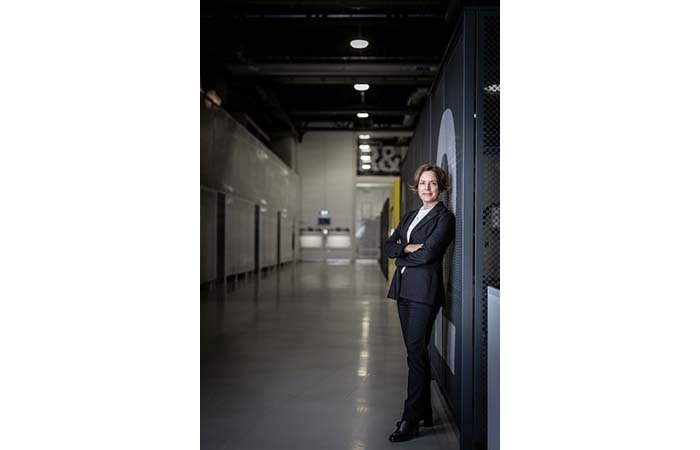
2026 has begun, and transformation across all industries is accelerating. Sustainability, digitalization, and talent development are now firmly at the top of the manufacturing agenda, redefining the way companies operate and compete. Against this backdrop, Helen Blomqvist, President of Sandvik Coromant, reflects on more than 80 years of market leadership in the cutting tools industry and the forces that will shape the years to come.
We build the future on the foundations of our heritage
Sandvik Coromant's position as a global leader in cutting tools and manufacturing solutions is rooted in its history, but it is also firmly oriented towards the future. At a time when transformation is at the top of the global agenda, we actively support customers around the world, helping them navigate change and seize new opportunities.
Leadership in a changing world requires clarity of direction without losing sight of our roots. Even with a strong brand and a proud history, we cannot rest on our laurels; we must strive to grow and be effective today, while simultaneously transforming our capabilities to remain the undisputed market leader tomorrow.
A key part of this approach is creating a culture of learning. Psychological safety and curiosity are essential, and it's crucial to create an environment where people feel safe to experiment with new ideas. High-performing and empowered teams, with a strong customer-focused mindset, are at the heart of how we translate strategy into action. Eliminating the fear of failure, combined with curiosity and a strong customer focus, is essential to moving forward.
A sector in full transformation
The manufacturing sector is experiencing a rapid technological leap. But it's important to recognize that this represents an opportunity, rather than a threat. The sector is undergoing significant change, with customers at different stages of the journey. Sustainability, digitalization, severe cost pressures along the entire value chain, and the skills gap are the trends characterizing this shift.
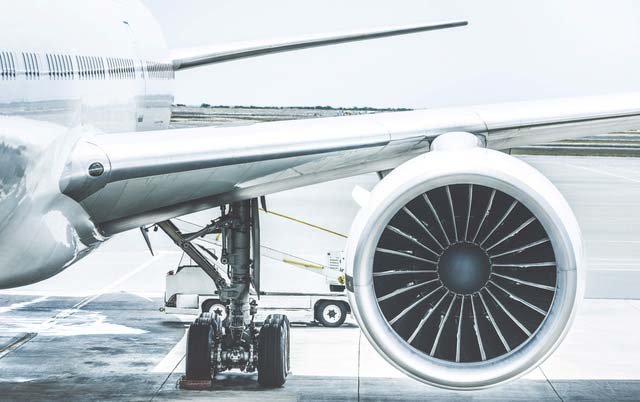
This is particularly evident in sectors like aerospace, where growth is driven by the demand for lightweight structures, next-generation engines, and greater fuel efficiency. These requirements are accelerating the adoption of advanced materials like titanium and heat-resistant superalloys, pushing manufacturers to invest in more sophisticated processing technologies.
Market forecasts, such as those detailed in the Deloitte 2026 Aerospace and Defense Industry Outlook, point to a new era of growth, with global aircraft production accelerating thanks to recovering passenger demand, intensified fleet modernization, and the beginning of OEMs' clearing of long-standing backlogs. At the same time, defense and space programs continue to expand, creating sustained demand for high-performance materials and precision components. Together, these forces are driving one of the strongest production cycles the aerospace industry has seen in over a decade.
AI as a strategic driver for people and production
Artificial intelligence is moving beyond experimentation to become an essential tool. Across industries, leaders are integrating AI into operations, supply chains, purchasing, and quality control.
Sandvik Coromant has recognized this for several years and has a dedicated AI team focused on getting the most out of the technology. The organization isn't alone in this: data from Xometry's Manufacturing Outlook 2026 reveals that 82% of executives consider AI a key growth driver, with nearly half already reporting significant ROI.
Artificial intelligence has moved beyond the hype stage to become a fundamental tool for manufacturing, and its adoption is expanding in critical areas such as supply chain, purchasing, and quality control. Looking to the future, we can expect AI systems to be fully integrated into smart factory operations. Machines will learn and adapt in real time, intelligently optimizing production parameters, reducing waste, and proactively scheduling maintenance.
Looking ahead, the manufacturers that will succeed in 2026 will be those that treat AI not as a standalone technology, but as a strategic capability woven into culture, processes, and leadership, leveraging data and automation to unlock new levels of efficiency, resilience, and customer value. Used responsibly and transparently, AI will be a critical driver of productivity, sustainability, and long-term competitiveness across the entire manufacturing ecosystem.
Sustainability translated into action
It's difficult to look at the future of manufacturing, both short and long-term, without considering its impact on our planet. "We can choose to lead or be led to ruin," said United Nations Secretary-General António Guterres at the opening of the COP30 climate conference held in Belem, Brazil, in November. "Choose speed, scale, and solidarity. Choose to make this moment a turning point. Stand up for science. Stand up for justice and future generations," he urged.
His words reflect a truth the industry can no longer ignore: sustainability is not optional, but a determining force in the way manufacturers operate. What matters now is the ability to translate ambition into concrete, scalable initiatives that deliver real environmental and commercial value, especially at a time when the prices of critical raw materials like tungsten and other metals are rising sharply, putting further pressure on manufacturers' cost structures.
At Sandvik Coromant, this shift is already underway. One example is our buyback program, which allows customers to sell used carbide tools back to us for recycling and circular production. In a market where raw material prices are rising significantly, circular solutions like this help both customers and suppliers reduce exposure to volatile input costs while strengthening long-term resource security.
Supported by a digital portal, the program simplifies logistics, pricing, and CO2 reporting, while reducing the need for virgin raw materials. It transforms circularity from a concept to a practical, everyday process in the workshop. We are also developing similar digitalized processes for our remanufacturing offering, enabling customers to maximize their inventory and leverage easy-to-use self-service platforms, improving efficiency, extending tool life, and supporting margin resilience in an increasingly cost-constrained environment.
Another important initiative is the Sustainability Analyzer, which we launched in 2025. Through this tool, our team can clearly demonstrate the CO2 reductions customers can achieve by using more efficient processing solutions, making sustainability measurable and actionable in investment and production decisions.
Looking ahead to 2026, sustainability will be increasingly data-driven and integrated into core manufacturing workflows. Customers will expect transparent carbon metrics along with performance and costs, and suppliers will be judged on their ability to support decarbonization across the entire value chain. Digital tools will play a central role in enabling this shift, transforming environmental impact into a shared and quantifiable responsibility.
Looking to the future
Customers are already starting to expect more than just the products they buy. They're looking for solutions that create value through strategic partnerships, digital innovation, and a shared commitment to sustainable manufacturing.
Sandvik Coromant is strongly positioned for the future, combining today's performance with tomorrow's transformation, serving as both a natural partner in industrial matters and an employer of choice. Contributing to learning, innovation, and building strong teams is the hallmark of success.
Sandvik Coromant
Together with customers and partners, Sandvik Coromant paves the way to a sustainable future and provides tooling solutions to mechanical engineering industries worldwide. Over eighty years of practical experience have allowed us to build a wealth of knowledge in metal cutting and machining. This expertise transforms every challenge into an opportunity for innovation, collaboration, and cutting-edge solutions. Our goal is to pursue positive change by promoting sustainability, efficiency, and growth to shape a future where innovation is at the forefront. Part of the global industrial engineering group Sandvik, Sandvik Coromant is committed to building the future, together with its customers.
Kipp presents the new remote product line - safe locking and actuation from a distance
KIPP is expanding its range with the REMOTE product line, designed for applications where control elements are not directly accessible. The line primarily includes locking pins, actuating devices, and snap-action latches that can be connected via Bowden cables. A new online configurator, available directly on the respective product page, helps customers select the most suitable components for their application. When installation space is limited or certain functions are not, or should not be, directly accessible, the control point must be relocated. It is precisely for these situations that KIPP has developed the new REMOTE product line. The range primarily includes locking pins, actuators, and latches and is designed for applications requiring the safe remote control of mechanical functions. In machine and equipment construction, this primarily concerns the opening and closing of doors and enclosures. With swivel or rotating devices, however, the focus is on achieving defined locking positions, while in special vehicle construction, the requirement is to securely position the stops. The requirements are similar, but the installation conditions are often different. To this end, REMOTE combines coordinated components connected via Bowden cables. Force transmission is mechanical, and the control side can be freely positioned. It is also possible to centralize access to functions by connecting multiple locking devices to a single control element via Bowden cables. Conversely, a function can be operated with two independent control elements. In hard-to-reach areas and with large moving parts, this solution significantly improves handling and ergonomics. During installation, the cable control can be adjusted to the required length, allowing different installation conditions to be accommodated without the need for additional special solutions. New locking pin platform with online configuratorThe heart of the REMOTE series is a new locking pin platform for remote actuation. This is complemented by specially designed and design-matched control elements. This new range was developed in response to numerous customer requests for customized solutions, which have now been incorporated into a broader standard range. New additions include variants with extended locking pins, as well as versions with hexagon and thread, with through-threaded sleeve, or with smooth sleeve. The range has also been expanded on the control side. In addition to various handle variants, such as T-grips, star grips, or clamping levers, solutions with one or two Bowden cable connections are available.To enable you to quickly and confidently choose the most suitable solution from the numerous variants, KIPP has developed an online configurator. Available directly on the respective product page, the configurator guides the user through the relevant parameters and combines compatible actuators, locking pins, and cable distributors. This provides designers with a reliable basis for selection, without having to individually test each combination. The configured solution can be transferred directly to the ordering process.Pneumatic locking pins for automated processesIn addition to mechanical solutions, the KIPP range includes pneumatic locking pins with end-of-travel detection. They are used in applications where manual actuation is not possible, such as in automated processes or where cycle times are short. The pin can be operated entirely by compressed air. At the same time, an integrated sensor signals whether it is in the extended or retracted position. This provides the system control system with clear status information.Brief profile of HEINRICH KIPP WERKHEINRICH KIPP WERK is a specialized manufacturer of clamping technology, standard parts, and control components. Its products are manufactured in Germany using a large fleet of machinery. The range includes over 90,000 items, which are quickly available thanks to the company's logistics center. KIPP is therefore a reliable partner for industry and the plant and mechanical engineering sectors.KIPP develops all its products in-house and tests them in a quality assurance process. Thanks to a high degree of production integration, the company is able to produce standard elements, assemblies, and special solutions. When developing KIPP control components, special attention is paid to ergonomics and robustness.HEINRICH KIPP WERK was founded in 1919 and since 1950 has focused on the development of in-house designed clamping devices, such as the classic KIPP clamping lever. The company employs over 530 people worldwide and is present in more than 50 countries.
 Industriale.it certification